


New Peer-Reviewed Research Validates Non-Contact Foot Temperature Measurement in People With Diabetes
We are proud to announce the publication of a new peer-reviewed study in the Journal of Diabetes Science and Technology titled:
“Foot Temperature Measurement in People With Diabetes: Validation of a Non-Contact Thermal Device.”
The study evaluates the validity of a non-contact thermal imaging system for measuring foot temperature — a clinically meaningful biomarker in the early detection and prevention of diabetic foot ulceration.
Study Overview
Foot temperature monitoring has long been recognised as an effective strategy to identify early inflammation associated with diabetic foot complications. This technical validation study assessed whether a non-contact thermal device could reliably measure temperature differences between feet when compared with the current reference standard.
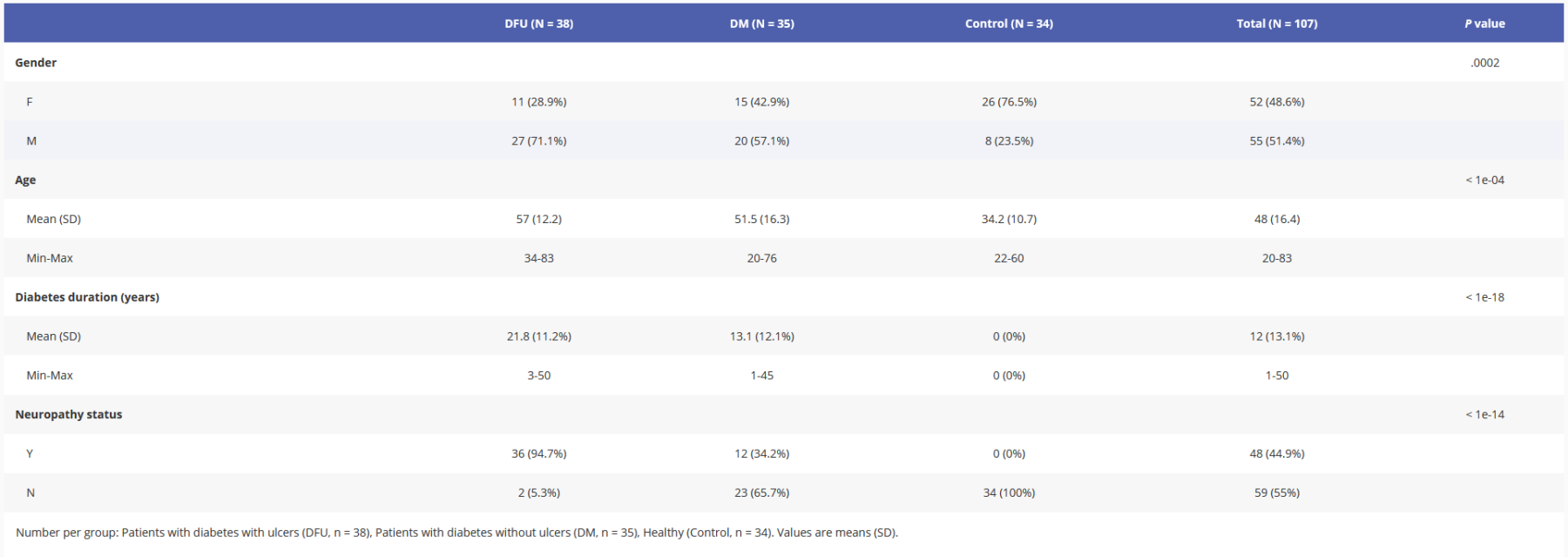
The study involved 107 participants across three distinct groups:
- People with diabetes and an active diabetic foot ulcer (DFU);
- People with diabetes without ulcers;
- Healthy control participants without diabetes.
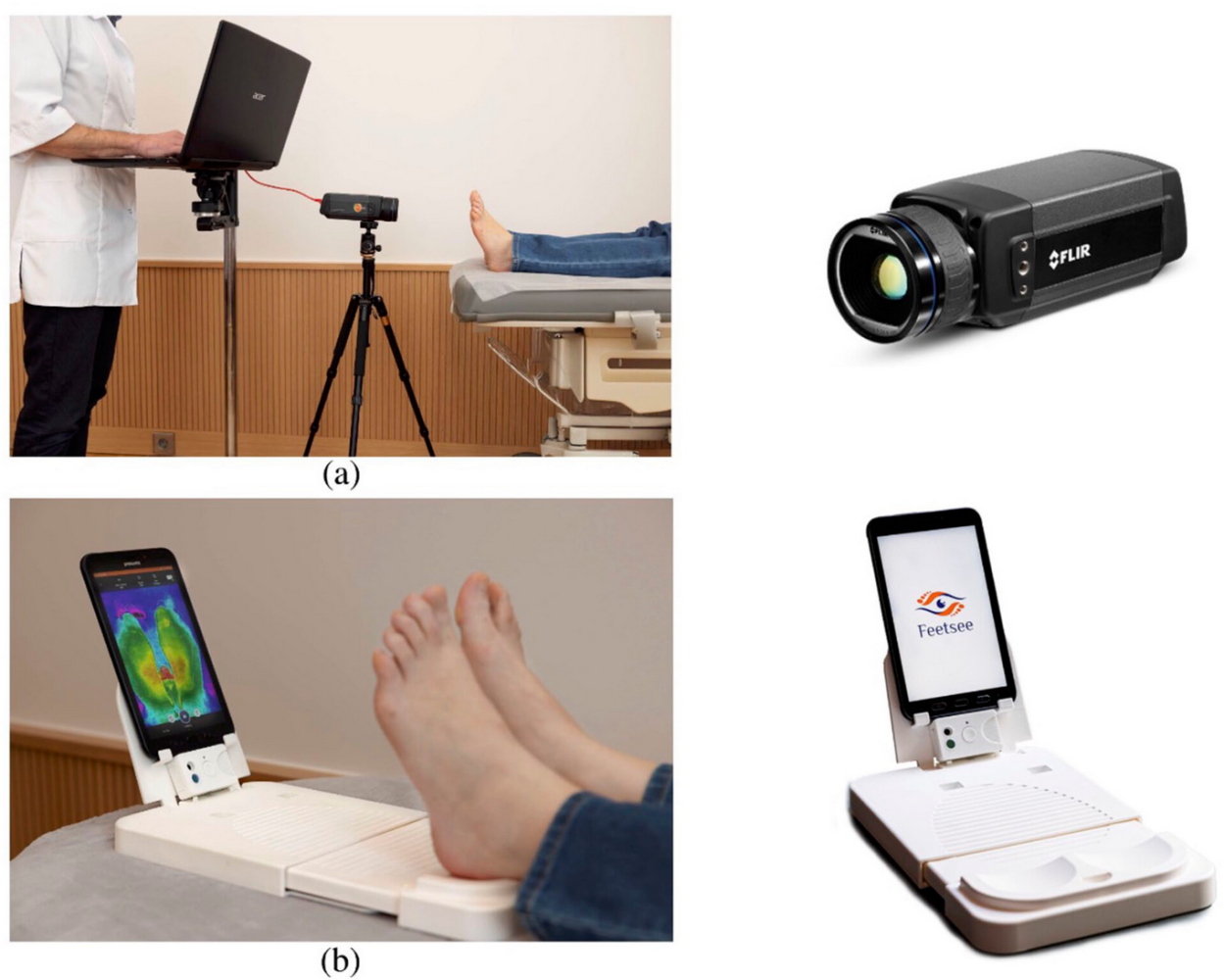
Measurements obtained using the non-contact system were compared against the reference standard FLIR A615, with FDA-approved TotalVision software.
Key Findings
The results demonstrated strong validity and reliability, including:
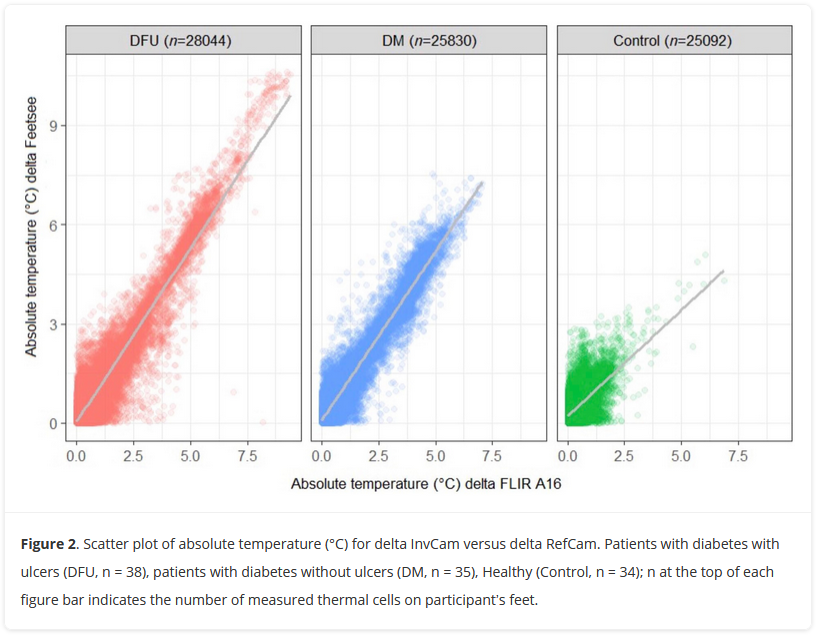
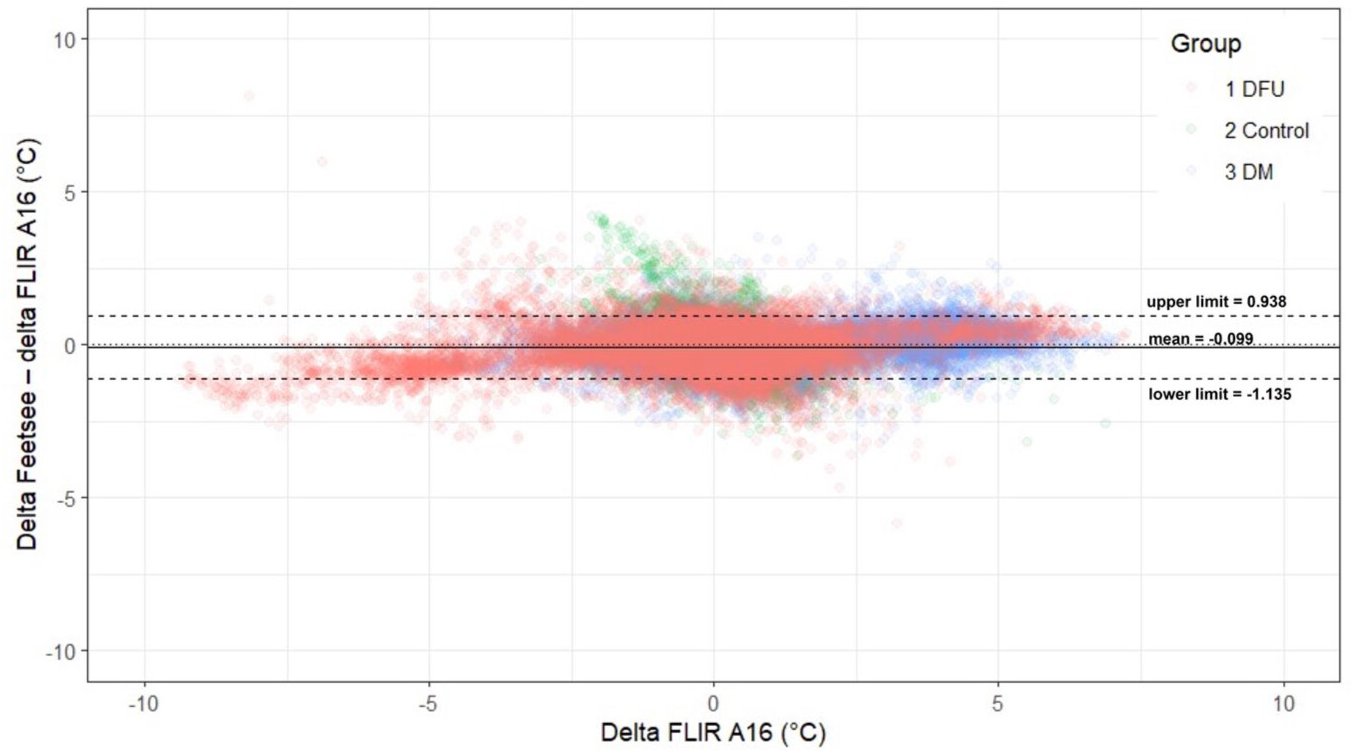
- Excellent agreement between the non-contact device and the reference standard
- Intraclass correlation coefficient (ICC) of 0.95, indicating very high reliability
- Typical measurement error of just 0.31°C
- Validation of a non-contact approach, eliminating risks of infection and cross-contamination associated with contact-based systems
These findings reinforce the scientific credibility of contactless foot temperature monitoring as a practical and reliable tool for identifying early inflammatory changes linked to diabetic foot complications.
Expert Collaboration
This research was made possible through collaboration with internationally recognised leaders in diabetic foot research:
- Andrew J. M. Boulton, MD, DSc – a global authority whose work has shaped modern diabetic foot prevention and management
- Loretta Vileikytė, MD, PhD – known for her contributions to diabetic neuropathy and patient-centered outcomes
- Neil D. Reeves, PhD – an expert in biomechanics and foot health science, advancing evidence-based innovation
Their insight, experience, and commitment to improving diabetic foot care were instrumental in delivering this research.

Detect Early, Prevent Amputations
Diabetic foot ulcers (DFUs) lead to significant discomfort, pain, numerous amputations, and billions of dollars in healthcare costs each year.